Metal Underpinning for Mobile and Tiny Homes: Built to Last and Made to Fit
The space under a mobile or tiny home doesn’t get much attention—but it probably should. Good underpinning protects your plumbing, keeps pests and moisture out, helps with insulation, and gives the whole structure a cleaner, more finished look. Skip it or cheap out, and you’ll feel it down the road.
Vinyl and wood have been the default for years, but metal panels are changing that. They hold up better, look better longer, and—with the right supplier—can be customized to fit whatever you’re working with. That last part matters more than most people realize.
What Underpinning Actually Does
Call it skirting, perimeter paneling, or foundation enclosure—it all means the same thing: closing off the base of the home. For mobile and tiny homes, that’s especially important since the underside is exposed to the elements in a way that a traditional foundation isn’t.
Done well, it protects your plumbing and subfloor from weather and temperature swings, keeps rodents and insects from moving in, improves energy efficiency, and makes the home look like it belongs where it’s sitting. That combination of function and appearance is why more contractors and homeowners are moving toward metal.
Why Metal Holds Up Better
Vinyl cracks. Wood warps. Neither one handles years of ground-level moisture, sun, and temperature changes particularly well. Steel does.
Metal underpinning resists rot, insects, and harsh weather without needing much attention. Reflective coatings can cut down on heat buildup underneath the home. And unlike vinyl, it keeps its shape—no bowing, no gaps opening up over time. For something that’s essentially a long-term installation, that durability is hard to argue with.
Steel Soffit as Underpinning
Soffit panels aren’t something most people think of for underpinning, but they’re actually a strong fit. Best Buy Metals offers a steel soffit system built from 24-gauge steel, with panels cut to length and installed with concealed fasteners for a clean finish.
You can run them vertically or horizontally depending on the layout, and vented versions are available if airflow is a concern—which it often is in enclosed crawl spaces. The panels are sturdy enough to handle ground-level exposure without denting or shifting over time.
Siding Panels Work Too
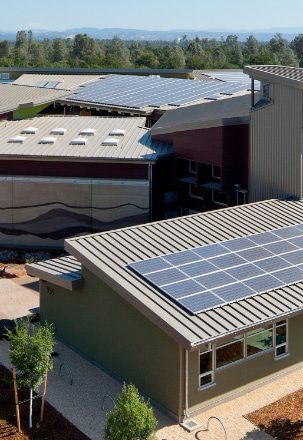
If soffit isn’t the right fit for your project, standard metal siding profiles are another solid option. Best Buy Metals carries corrugated panels, R-panels, board and batten, and lap siding—enough variety that you can actually match the underpinning to the rest of the home rather than treating it like an afterthought.
For larger perimeters, siding panels tend to be more cost-effective. Trim and flashing integrate cleanly, and the profiles are strong enough for exposed lower sections where impact resistance matters.
When You Need Custom Panels
Standard panels work fine on flat, level ground. But mobile and tiny homes don’t always sit that way. Slopes, piers, uneven terrain, and awkward corners can all create gaps that off-the-shelf panels just won’t cover cleanly.
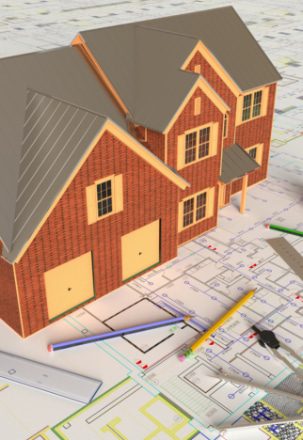
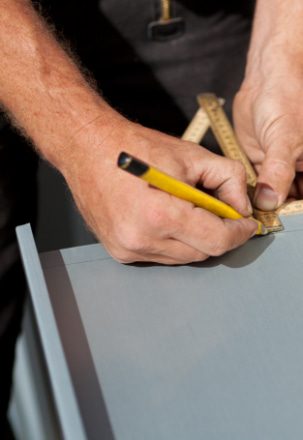
Custom fabrication solves that. With panels cut and bent to your exact specs, you can fit around uneven ground without patching, combine trim and flashing into a single piece, reduce seams, and end up with an install that looks intentional rather than improvised. It takes more planning upfront, but the result is usually faster to install and cleaner in the end.
Where This Works Best
Metal underpinning is a practical choice for:
– Mobile homes replacing aging or damaged vinyl skirting
– Tiny homes where aesthetics and durability both matter
– Modular housing projects that need a consistent look across multiple units
– Cabins and off-grid builds where low maintenance is a priority
A Few Things to Keep in Mind During Installation
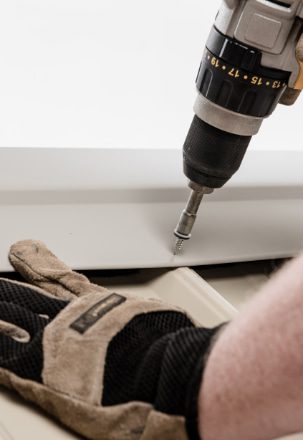
Metal underpinning isn’t complicated to install. But here are a few things to remember. Panels need proper framing or a support track to attach to. Ventilation should be planned before panels go up, not after. Use the right trim, flashing, and closures—they’re not optional. And on longer runs, leave room for expansion and contraction, especially in climates with big temperature swings.
Since panels can be cut to exact lengths, you’re not piecing together short sections or trimming down oversized pieces on site. That alone speeds up the job considerably.
What Best Buy Metals Brings to the Table
Because Best Buy Metals handles both manufacturing and distribution in-house, ordering is straightforward. Panels are cut to the size you actually need, which cuts down on waste and leftover material. Delivery is available nationwide. There’s a wide range of profiles to choose from, and custom bending is available for more complex builds.
That setup works whether you’re a homeowner tackling one project or a contractor managing several at once.
Underpinning Worth Noticing
Metal underpinning doesn’t have to be something you install and forget about. With the right panels—soffit, siding, or custom-fabricated—it can actually add to the look of the home while doing its job quietly in the background for decades.
It’s one of those upgrades that’s easy to put off and hard to regret once it’s done.
FAQ
Can soffit panels be used for underpinning?
Yes. Steel soffit installs in multiple orientations and handles both weatherproofing and ventilation well.
What’s the best material for mobile home underpinning?
Metal is one of the most durable, low-maintenance options available—especially compared to vinyl or wood.
Can panels be made to fit specific dimensions?
Yes. Panels can be cut to length and custom-shaped for layouts that don’t fit standard sizing.
Is metal better than vinyl skirting?
For most applications, yes. It lasts longer, handles the elements better, and doesn’t require nearly as much upkeep.